Cyber Briefing: 2026.01.15
VoidLink targets Linux clouds; Palo Alto DoS patch, Firefox 147 fixes; major edu/health breaches; RedVDS takedown; Gemini links data; CNIL fines Free.
👉 What’s going on in the cyber world today?
Welcome to Cyber Briefing, the newsletter that informs you about the latest cybersecurity advisories, alerts, incidents and news every weekday.
First time seeing this? Please Subscribe
🚨 Cyber Alerts
1. VoidLink Malware Targets Linux Clouds
A sophisticated Linux malware framework called VoidLink has been identified targeting cloud and container environments through a modular system of loaders and rootkits. Developed by Chinese-speaking actors and written in multiple programming languages, the framework remains in active development as a likely commercial product for infiltrating modern infrastructure.
2. Palo Alto Fixes GlobalProtect DoS Flaw
Palo Alto Networks has issued patches for a high-severity denial-of-service vulnerability in its GlobalProtect software that could allow unauthenticated attackers to disable firewalls. Although no active exploitation has been reported, the company warns that a proof-of-concept exploit code already exists.
3. Firefox 147 Fixes Code Execution Flaws
Mozilla launched Firefox 147 on January 13, 2026, to resolve 16 security vulnerabilities affecting critical systems like JavaScript and network protocols. The update includes fixes for high-impact sandbox escapes and memory corruption issues, and it is also available for long-term support versions of Firefox and Thunderbird.
For more alerts click here!
💥 Cyber Incidents
4. Maine Healthcare Breach Exposes Data
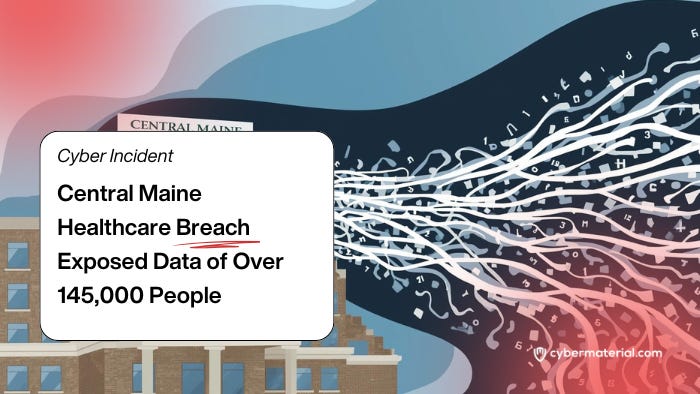
A significant data breach at Central Maine Healthcare recently concluded its investigation, revealing that the personal information of over 145,000 people was compromised. Hackers maintained access to the organization’s internal systems for more than two months last year before the intrusion was detected and contained.
5. Monroe University Data Breach Affects Many
Monroe University recently confirmed that a cyberattack in late 2024 resulted in the theft of sensitive data belonging to more than 320,000 individuals. The breach involved personal, financial, and medical information, leading the institution to provide credit monitoring services to those impacted by the security failure.
6. Hackers Steal Student Data In Victoria
The Victorian Department of Education recently confirmed a data breach involving a database containing personal information and email addresses of both current and former students. In response to the unauthorized access, officials have reset all student passwords and are working to restore account access before the start of the 2026 school year.
For more incidents click here!
📢 Cyber News
7. Microsoft Disrupts RedVDS Cybercrime
Microsoft has partnered with law enforcement in the U.S. and the U.K. to dismantle RedVDS, a cybercrime subscription service that facilitated millions of dollars in fraudulent activity. By seizing the group’s infrastructure and taking their websites offline, officials aim to disrupt a platform that provided cheap, untraceable virtual computers to criminals worldwide.
8. Google Personal Intelligence Links Gemini
Google is launching a beta feature called Personal Intelligence that allows Gemini to access data across your Gmail, Photos, and Search history to provide more relevant answers. Users have full control over which apps are linked and can disable the feature at any time to maintain their privacy.
9. France Fines Free Mobile Over Breach
The French data protection authority (CNIL) fined Free and Free Mobile 42 million euros for failing to safeguard the personal information of approximately 23 million subscribers during a major 2024 data breach. Although the companies have since improved their security, the regulator found significant violations of GDPR rules regarding data retention, security protocols, and the quality of their communications with affected customers.
For more news click here!
📈Cyber Stocks
On Thursday, 15th January, cybersecurity stocks broadly traded lower as geopolitical concerns and profit-taking weighed on the sector. Renewed tensions between the U.S. and China, including reports that China has banned the use of certain foreign cybersecurity software, pressured several leading names and amplified macro uncertainty. Defensive tech demand trends and ongoing enterprise security spending remained supportive, but broader risk-off sentiment limited gains.
Palo Alto Networks closed at around 188 to 191 dollars and eased, as broader market volatility and concerns over China’s reported software ban pressured tech sector valuations even as long-term confidence in its AI-driven platform and cloud security positioning persists.
CrowdStrike closed at around 460 to 470 dollars and moved lower, influenced by profit-taking and sector rotation despite its ongoing acquisition activity in identity security and continued demand for cloud-native endpoint protection.
Okta closed at approximately low-to-mid 90 dollars and dipped modestly, with broader tech caution tempering gains even as enterprise investment in identity and access management remains steady.
Zscaler closed at around low-to-mid 220 dollars and declined, reflecting light selling amid macro uncertainty, despite strong cloud-delivered security and zero-trust adoption fundamentals and a robust analyst buy consensus.
Fortinet closed at approximately high 70s to low 80 dollars and slipped, pressured by sector news and rotation even as interest in zero-trust and network-security solutions continues to support its longer-term outlook.
💡 Cyber Tip
🦊 Firefox 147 Fixes Code Execution Flaws
Mozilla has released Firefox 147 to patch 16 security vulnerabilities affecting core browser components, including JavaScript, graphics rendering, and networking. The update fixes high impact sandbox escapes and memory corruption bugs that could potentially lead to arbitrary code execution. Security updates are also available for Firefox ESR and Thunderbird.
🔐 What You Should Do
• Update Firefox to version 147 immediately
• Ensure Firefox ESR and Thunderbird are also fully patched
• Restart the browser after updating to apply fixes
• Keep automatic updates enabled on all browsers
• Avoid delaying updates in enterprise environments
⚠️ Why This Matters
Browser vulnerabilities are a common entry point for attacks. Fixing sandbox escapes and memory safety flaws reduces the risk of system compromise through malicious websites or web content.
📚 Cyber Book
Cyber Smart: Five Habits to Protect Your Family, Money, and Identity from Cyber Criminals by Bart R. McDonough
That concludes today’s briefing. You can check the top headlines here!
Copyright © 2026 CyberMaterial. All Rights Reserved.
Follow CyberMaterial on:
Substack, LinkedIn, Twitter, Reddit, Instagram, Facebook, YouTube, and Medium