

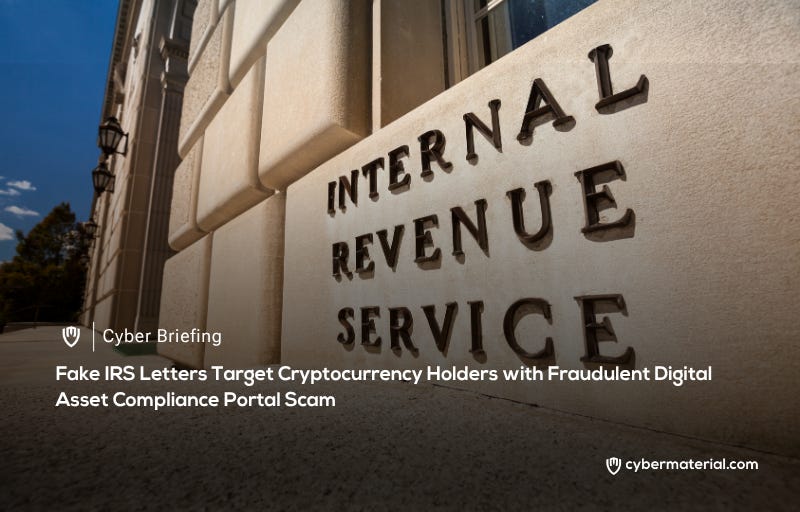
Cybercriminals are targeting cryptocurrency holders with fake IRS correspondence that demands registration with a nonexistent "Digital Asset Compliance Portal," according to security researchers at Bitdefender. The fraudulent letters attempt to exploit concerns about tax compliance in the cryptocurrency space, where regulatory requirements remain a source of confusion for many investors.
The scam leverages the IRS's legitimate interest in cryptocurrency taxation to create convincing phishing attempts. Victims receive official-looking letters instructing them to register with the fake portal, likely designed to harvest personal information, financial details, and potentially access to cryptocurrency wallets. The timing coincides with tax season, when cryptocurrency holders are already concerned about reporting requirements.
The fake portal likely requests sensitive information including Social Security numbers, cryptocurrency wallet addresses, transaction histories, and authentication credentials. Scammers may use this data for identity theft, direct theft of cryptocurrency assets, or sale on underground markets. The professional appearance of these letters makes them particularly dangerous for less experienced cryptocurrency users unfamiliar with actual IRS procedures.
This campaign represents a growing trend of scams targeting the cryptocurrency community, which holds an estimated hundreds of billions of dollars in digital assets. The decentralized and pseudonymous nature of cryptocurrency makes it an attractive target, as transactions cannot be reversed once completed. Many cryptocurrency holders lack experience with traditional financial compliance, making them more susceptible to official-sounding demands.
Cryptocurrency holders who receive suspicious IRS correspondence should contact the agency directly through verified phone numbers or the official IRS.gov website rather than responding to unsolicited letters. The IRS typically initiates contact through official mail with specific case numbers and never demands immediate action through unofficial portals. Security experts recommend verifying any compliance requirements with tax professionals and reporting suspected scams to the IRS and FBI's Internet Crime Complaint Center.
Source: https://www.bitdefender.com/en-us/blog/hotforsecurity/fake-irs-letters-cryptocurrency