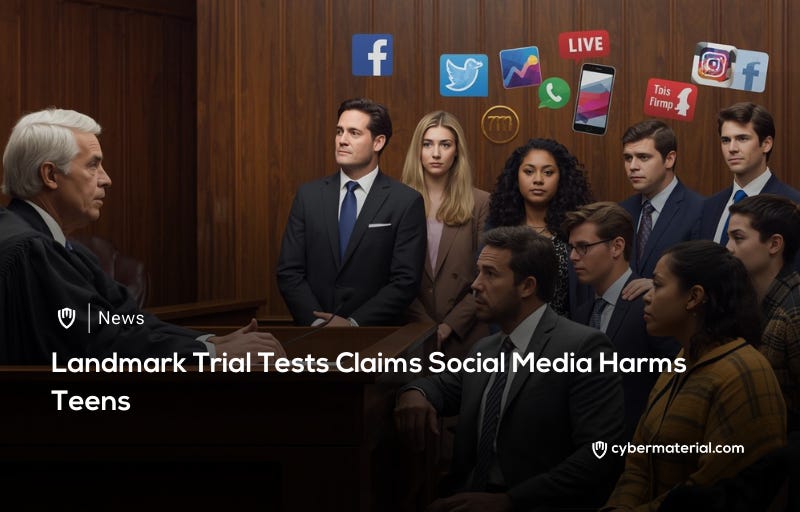
A Los Angeles jury is now considering whether platforms like Instagram and TikTok are directly responsible for causing mental health disorders in teenagers. This personal injury trial, the first of its kind to reach a courtroom, parallels historic legal battles against big tobacco and pharmaceutical companies regarding product addiction and public welfare.
A landmark personal injury trial begins this week in California, centering on a young woman’s claim that social media companies intentionally designed addictive products that severely damaged her mental health. This case represents a critical moment in a growing legal movement, as thousands of similar lawsuits are currently pending against major tech giants. The outcome could set a massive precedent for how social media platforms are regulated and held accountable for their impact on adolescent well-being.
The legal strategy employed by the plaintiff mirrors the scripts used in decades-old litigation against the tobacco and opioid industries. Lawyers argue that tech companies were fully aware of the psychological risks their algorithms posed to minors but chose to prioritize engagement and profit over safety. By framing social media as a defective and addictive product rather than just a communication tool, the prosecution hopes to bypass traditional legal protections that often shield internet companies from liability.
Defense teams for the social media platforms maintain that they have implemented numerous safety features and parental controls to protect younger users. They argue that mental health is a complex issue influenced by a variety of external factors beyond digital consumption. The companies also rely on federal laws that generally protect platforms from being held responsible for third-party content, asserting that they provide a service for expression rather than a harmful physical product.
The trial features intense scrutiny of internal company documents and expert testimony regarding brain chemistry and dopamine loops. Jurors will examine whether features like infinite scrolling and personalized notification systems were engineered specifically to keep teenagers hooked, regardless of the emotional toll. The plaintiff’s team seeks to prove that these design choices led directly to specific disorders, including anxiety, depression, and body dysmorphia.
As the first case of its kind to go before a jury, the proceedings are being watched closely by tech executives, mental health advocates, and legal experts nationwide. A verdict in favor of the plaintiff could trigger a wave of successful litigation and force fundamental changes in how social media apps are built and marketed to children. Conversely, a victory for the tech companies might stall the momentum of current legal challenges and reinforce the status quo of digital platform operations.
Source: Landmark Trial Tests Claims Social Media Harms Teens


