

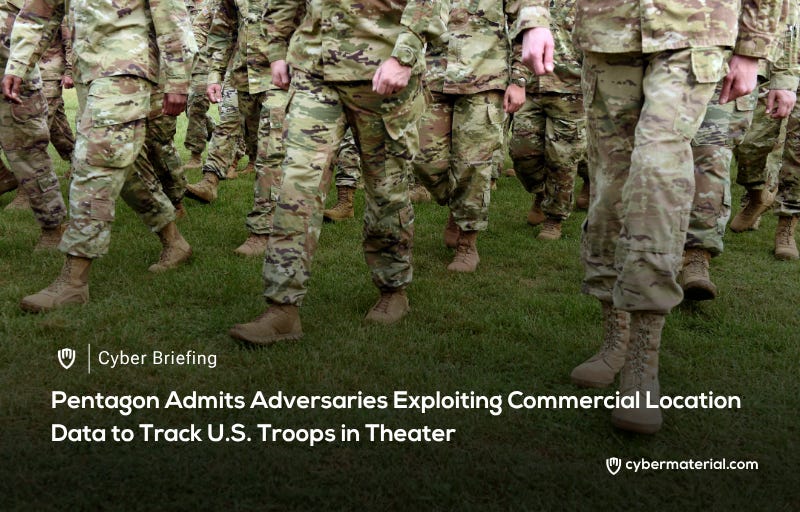
The U.S. Department of Defense has officially acknowledged that hostile actors are exploiting commercial location data to track American troops deployed in active conflict zones. In a letter from U.S. Central Command to Senator Ron Wyden, military officials confirmed receiving multiple threat reports concerning adversary use of commercially available location information to target or surveil U.S. personnel in theater. This marks the first known official admission that the commercial data ecosystem, built primarily for advertising purposes, is being weaponized against military forces in operational environments.
The vulnerability stems from the vast marketplace of location data collected by smartphone apps, advertising networks, and mobile tracking platforms. This information flows through a sprawling commercial ecosystem where data brokers buy and sell location intelligence with minimal oversight regarding end users. Security researchers have documented this risk since at least 2018, when Strava fitness tracking data inadvertently revealed sensitive military installations and troop movement patterns in Afghanistan, Iraq, and Syria. Despite years of warnings from privacy advocates and intelligence analysts, the problem has persisted and expanded.
CENTCOM's letter reveals significant technical challenges in protecting personnel. While troops receive guidance to disable geolocation functionality and review privacy settings, military officials acknowledge that disabling these capabilities does not always fully prevent commercial products from generating trackable data. Personal smartphones are not prohibited in theater, leaving individual service members responsible for implementing security measures that may prove inadequate against sophisticated data collection methods. Even government-issued devices face limitations, with some advertising-related settings remaining user-configurable and capable of leaking location information.
The operational implications are severe. Commercial location data can reveal where troops gather, their movement patterns, daily routines, and operational tempo. This intelligence supports various hostile activities including surveillance operations, drone targeting, missile attacks, and foreign intelligence recruitment efforts. The data requires no advanced hacking capabilities or expensive espionage infrastructure. Adversaries simply purchase access through legitimate commercial channels, turning the advertising technology ecosystem into a ready-made surveillance platform.
The Defense Information Systems Agency is currently testing additional controls and migrating government devices to a new management platform designed to allow location services to be completely disabled, with an estimated completion date of May 6, 2026. However, the delayed timeline raises questions about why comprehensive protections are only now being implemented despite nearly a decade of documented warnings from intelligence agencies, lawmakers, and security researchers. For deployed personnel, contractors near military installations, and intelligence officers operating overseas, smartphones continue to function as tracking beacons broadcasting behavioral patterns to anyone willing to pay for access through the commercial data marketplace.
Source: https://securityaffairs.com/192942/cyber-warfare-2/the-pentagon-finally-admits-that-location-data-is-a-battlefield-problem.html