

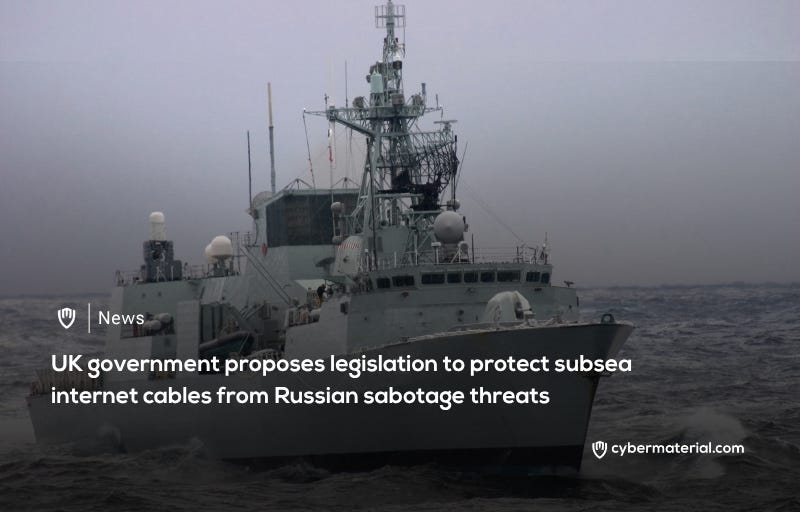
The British government has announced plans to strengthen legal protections for undersea internet cables following increased Russian naval activity near UK waters. In April, the Royal Navy and Royal Air Force tracked Russian submarines conducting covert reconnaissance of critical undersea infrastructure. Intelligence reports indicate Russia deployed an Akula-class attack submarine as a decoy while two specialist vessels from the Directorate of Deep Sea Research surveyed UK cable routes, apparently to facilitate potential sabotage during future conflicts.
The proposed measures, outlined by Baroness Liz Lloyd, Minister for Digital Economy, include tougher criminal penalties for ship owners and operators who recklessly damage subsea cables. Cable operators would face new security obligations requiring them to prevent, detect, and respond to security incidents in a consistent and timely manner. The government would also gain emergency powers to compel businesses to better protect their infrastructure when threats emerge.
Currently, 64 cables connect Britain to the global internet, with repair vessels typically arriving within eight days when breaks occur. Historically, most cable faults have resulted from fishing activity or dragging anchors rather than deliberate sabotage. However, the UK Parliament's Joint Committee on National Security Strategy criticized the government last year for being too timid in protecting these connections, urging stronger action.
The proposals rely heavily on legal deterrents and regulatory requirements rather than direct defensive capabilities. The Royal Navy's Atlantic Bastion program, launched last year with £14 million in initial funding, aims to deploy autonomous vessels to track enemy submarines in the North Atlantic. This program remains in early testing and development stages. Additionally, the UK, US, and Australia announced plans through their AUKUS partnership to jointly develop sensor and weapons payloads for uncrewed underwater vehicles.
The government plans to publish a white paper later this year detailing the full scope of proposed changes. Minister Lloyd emphasized that while the UK already has strong cable protections in place, the increasingly uncertain security environment requires continuous adaptation. The consultation process will determine how these legal and operational changes will be implemented across the maritime and telecommunications sectors.
Source: https://www.theregister.com/networks/2026/06/01/putin-sends-submarines-to-survey-britains-subsea-cables-uk-deploys-royal-navy-mobilizes-parliamentary-draftsmen/5248978